
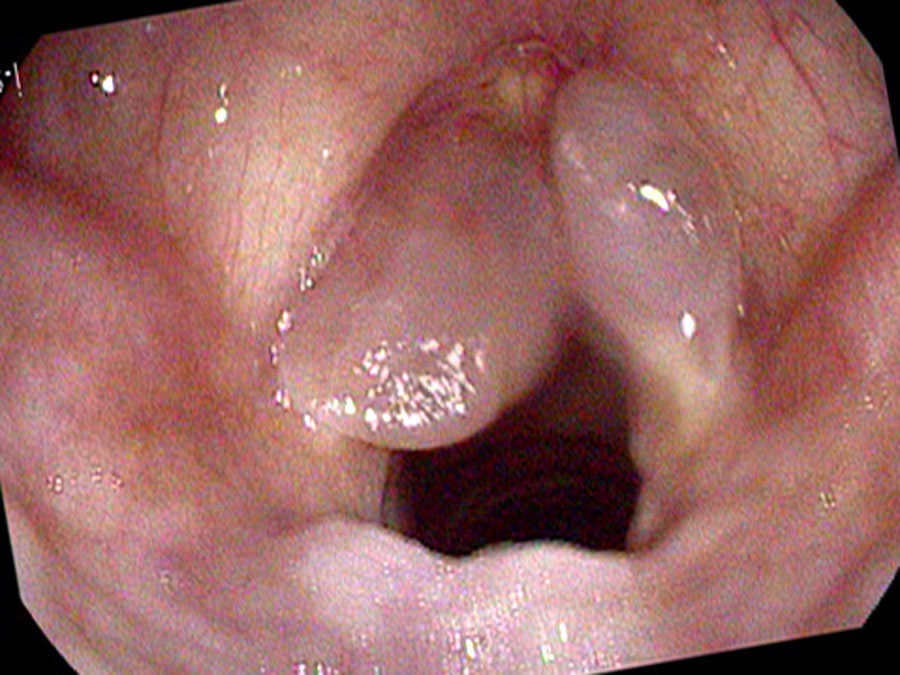
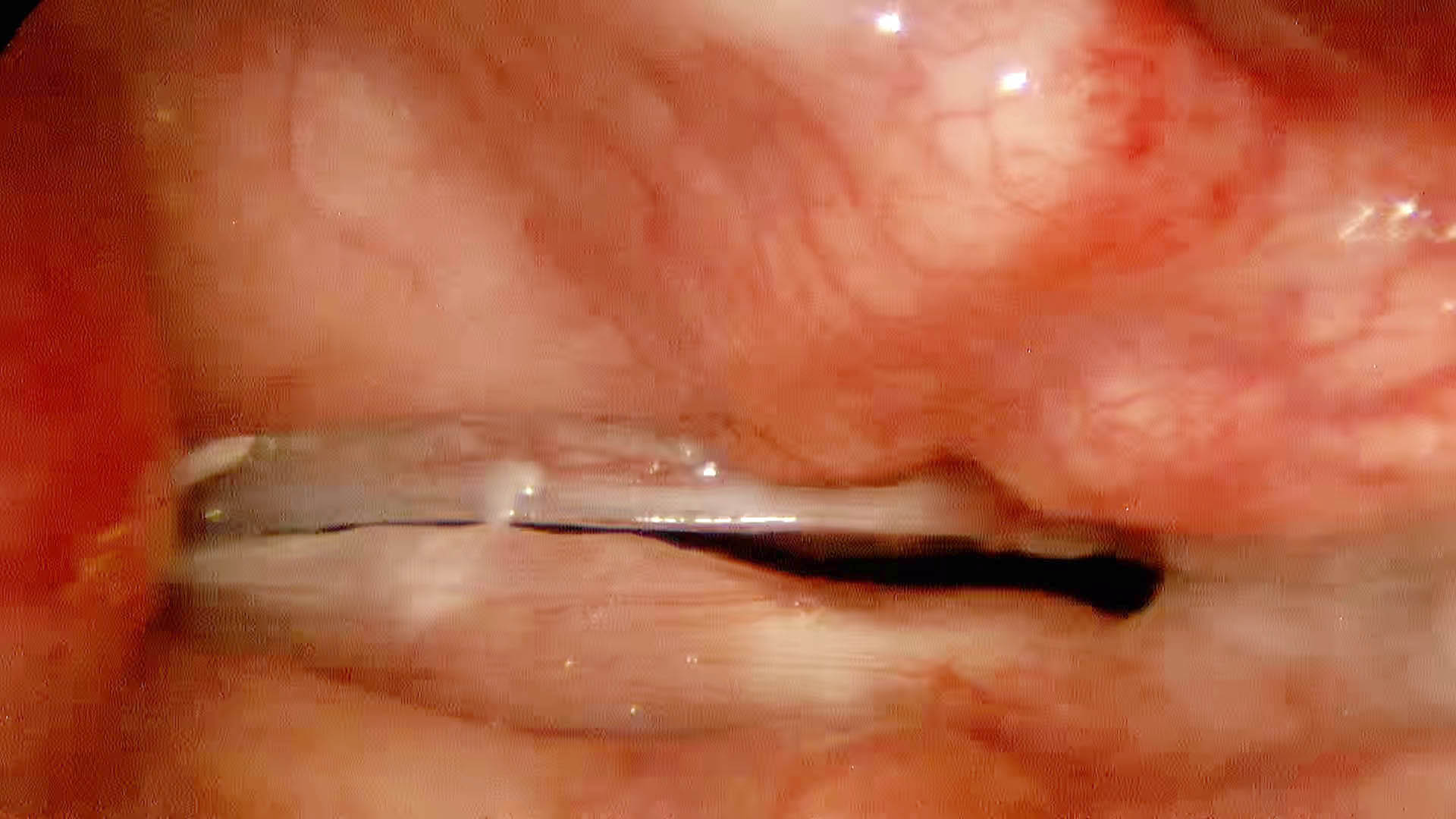
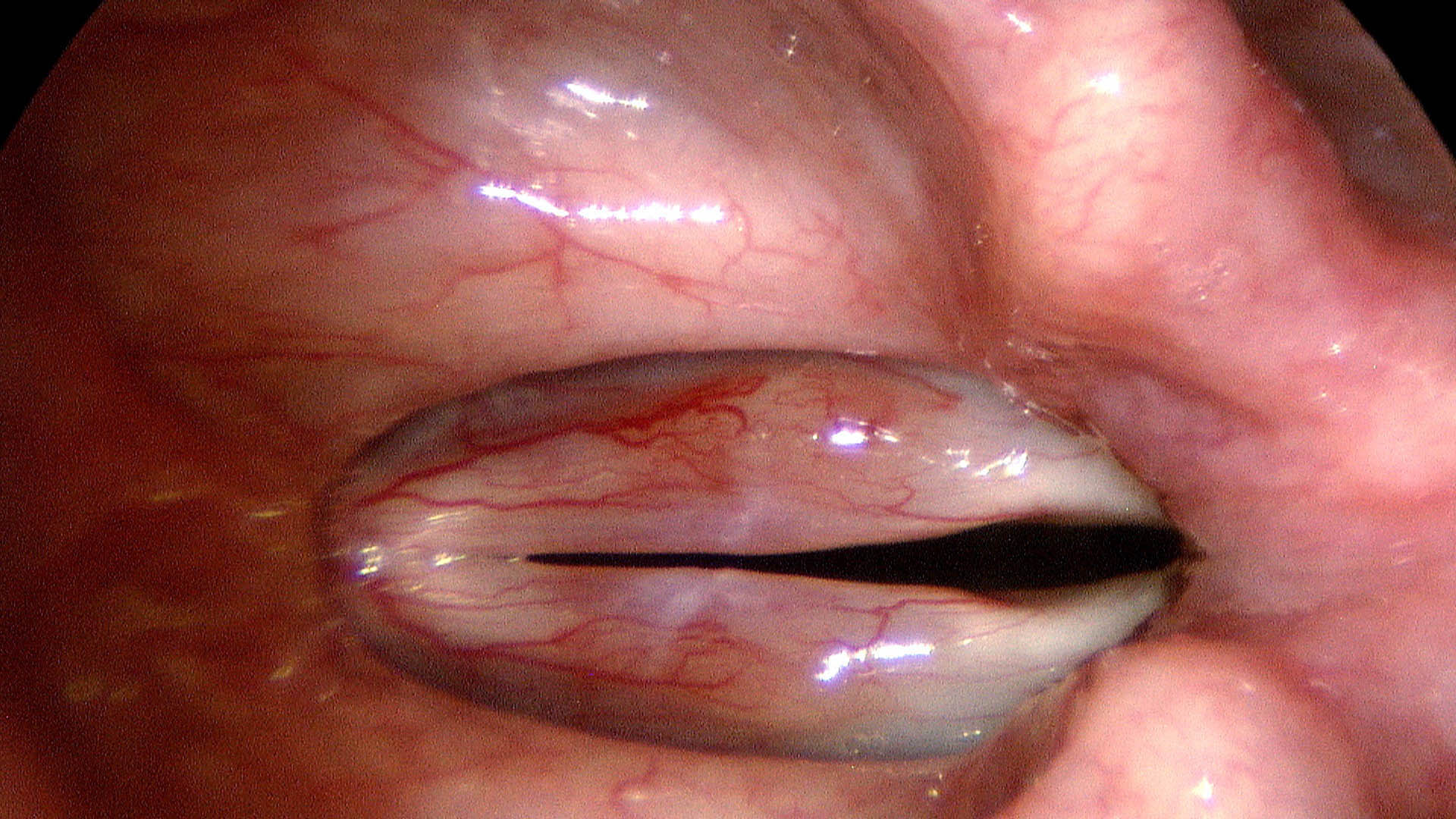
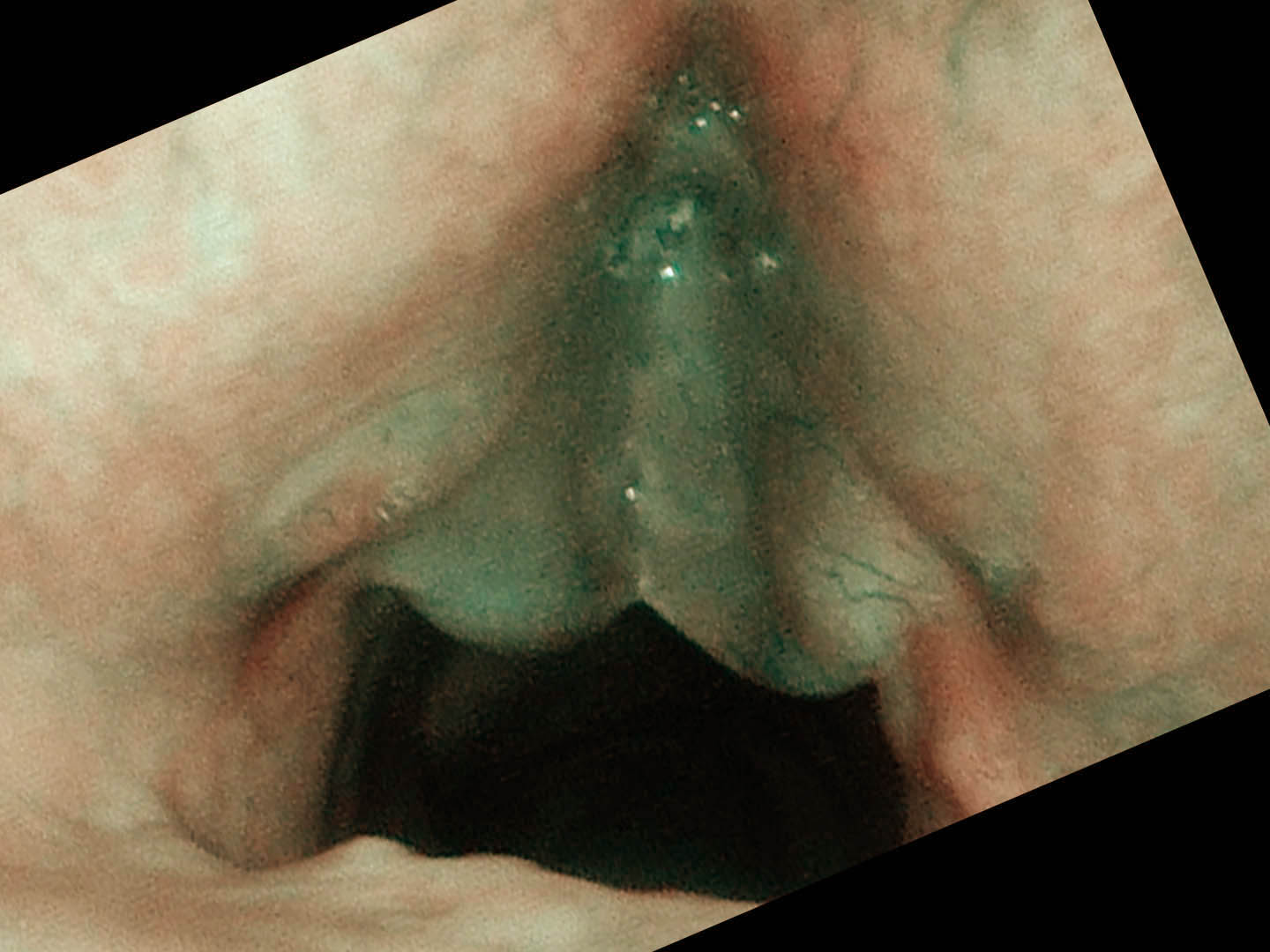
Unlike the unilateral hemorrhagic polyp arising from a single vocal accident, smoker’s polyps — also called Reinke’s edema — form bilaterally, extending the full length of both vocal cords. They develop slowly over years and require a specific combination of two factors: tobacco smoking and high talkativeness. Either factor alone is not enough.
Both conditions — talking and smoking — are required to develop smoker’s polyps. Either alone is not enough.
Tobacco and Talkativeness Together
Puije Parlet Fume has had trouble with a husky voice since childhood and is now in her mid-sixties. Her huskiness has become worse over the past year and a half — the voice not only varies in quality but at times fades completely. Speaking is becoming more effortful and she is finding it almost impossible to yell. Recently she has begun to notice increasing shortness of breath. She has been smoking about two packs of cigarettes a day for fifty years and rates herself a 7 out of 7 on the talkativeness scale.
On endoscopy there are large polyps extending the length of both vocal cords, based on the superior surface and moving in and out with speaking and breathing. At times they get caught below her vocal cords and no sound comes out at all. Because they are so large, at times she squeezes her false vocal cords together and makes them vibrate. This combination produces her characteristically very deep, rough voice: up to three pitches generated simultaneously from the asymmetric true cords and the vibrating false cords.
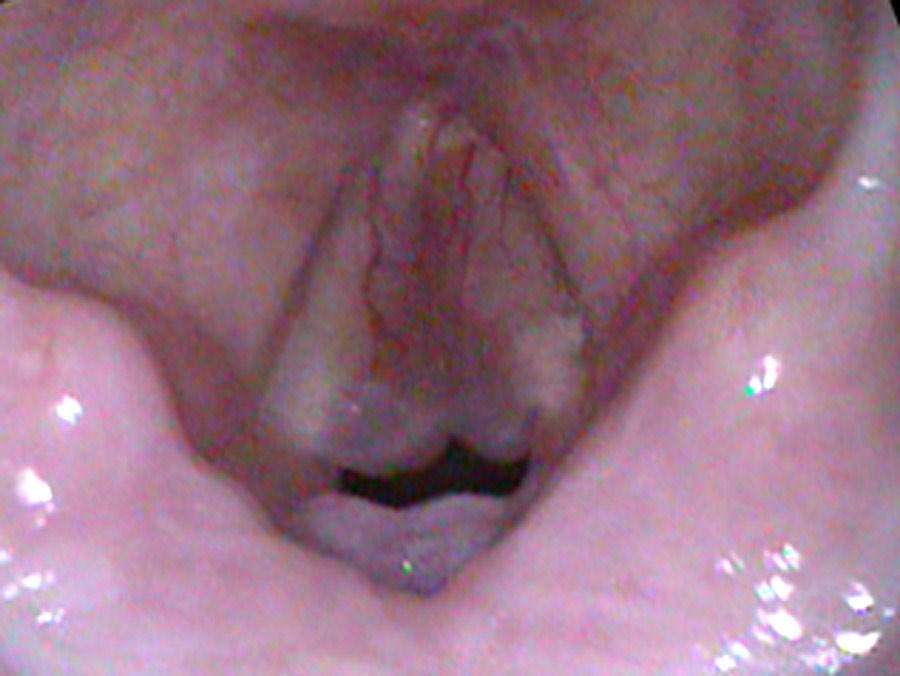
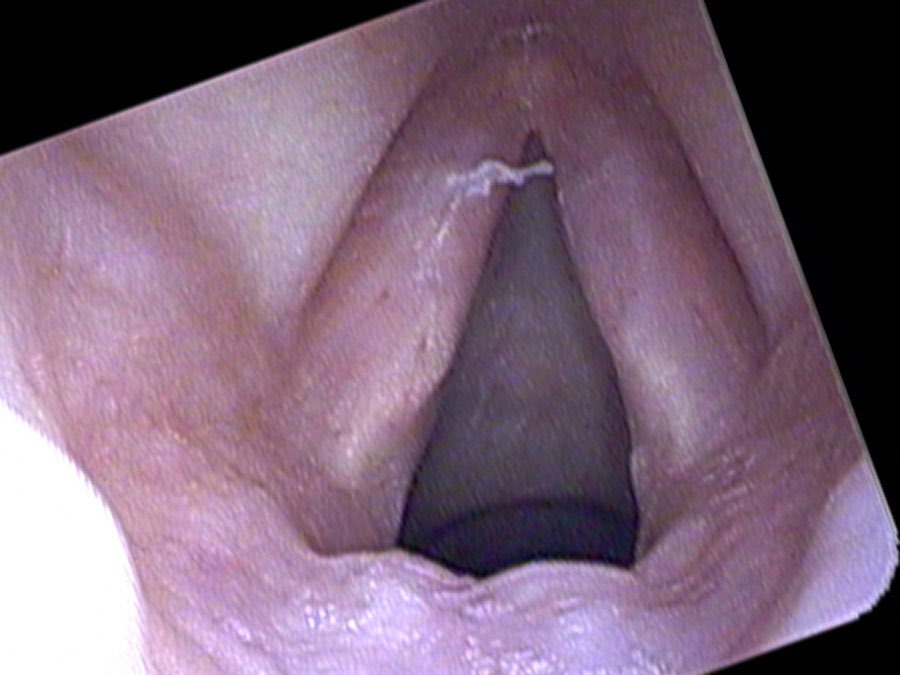
Why Both Conditions Are Necessary
If a person smokes but is not chatty (not a 5, 6, or 7 on the talkativeness scale), he or she will not form smoker’s polyps. If a person is talkative but doesn’t smoke tobacco, he or she will not form smoker’s polyps. Both conditions — talking and smoking — are required. It is possible that the heat or chemicals from tobacco smoke activate blood vessel growth in the vocal cord, and this extra blood supply contributes to the formation of the polyps. These ectatic blood vessels are also what allow smoker’s polyps to be treated with lasers that target blood vessels, such as the pulsed KTP laser.
Quitting smoking will not generally reduce the size of the polyps, though it may stabilize them. Quitting talking seems never to be an option for these patients. Consequently, treatment with surgery or laser is typically reserved for those who desire a higher speaking pitch or those whose polyps are large enough to impair breathing.
What You Learned
- Smoker’s polyps (Reinke’s edema) require both tobacco smoking and high talkativeness. Either factor alone is insufficient to produce them.
- Smoker’s polyps can grow large enough to cause shortness of breath by obstructing the airway on inhalation. Surgery or KTP laser reduces their size when breathing or desired pitch is affected.