
Jane Smith is in her mid-fifties. She has smoked about 10 cigarettes a day for the past 10 years. She developed a hoarse voice four months ago, though perhaps she lost some of her higher singing notes before that. She was treated with Nexium for a while and when she did not improve, she had a biopsy. The irregular area on her left vocal cord proved to be squamous cell carcinoma. When a white spot reappeared on her vocal cord shortly after the surgery removing this, she came to visit me.
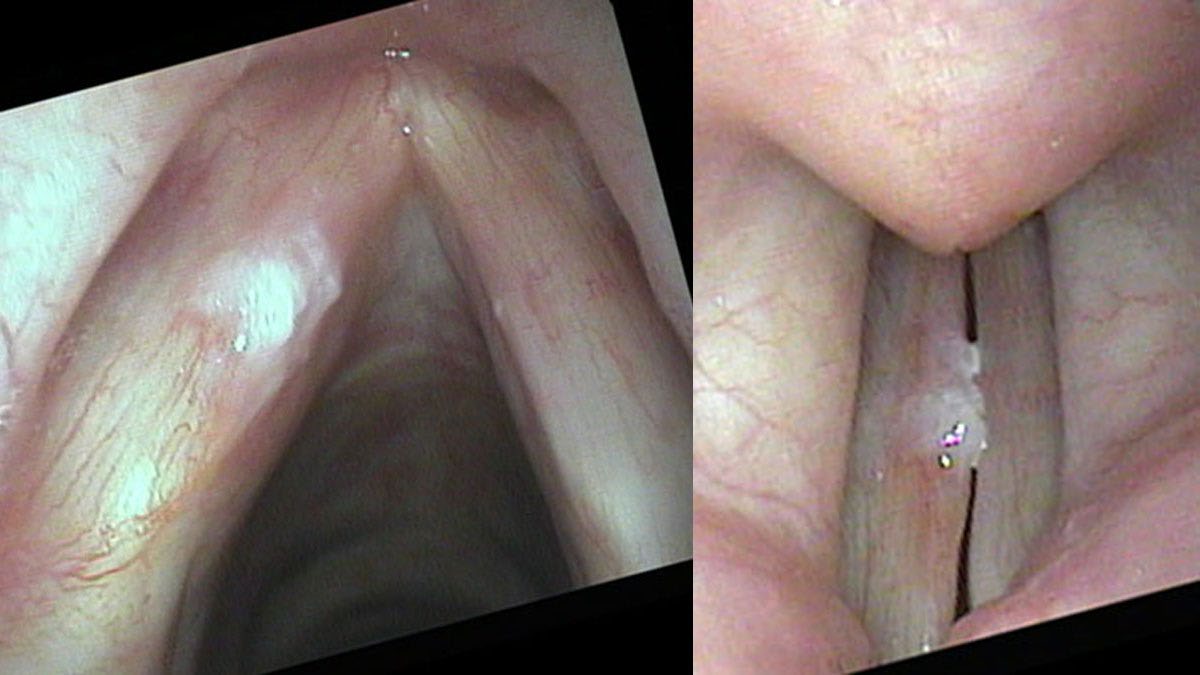
We went back to surgery and re-excised the area of leukoplakia again. This time the biopsy was benign. There was no cancer, only thickening of the mucosa. Her hoarseness went away since the white spots no longer stood out from the edge of the vocal cord as much. A smaller pair of white spots came back after surgery. Rather than cut them off again, we watched the white spots with regular examinations over the next three years.
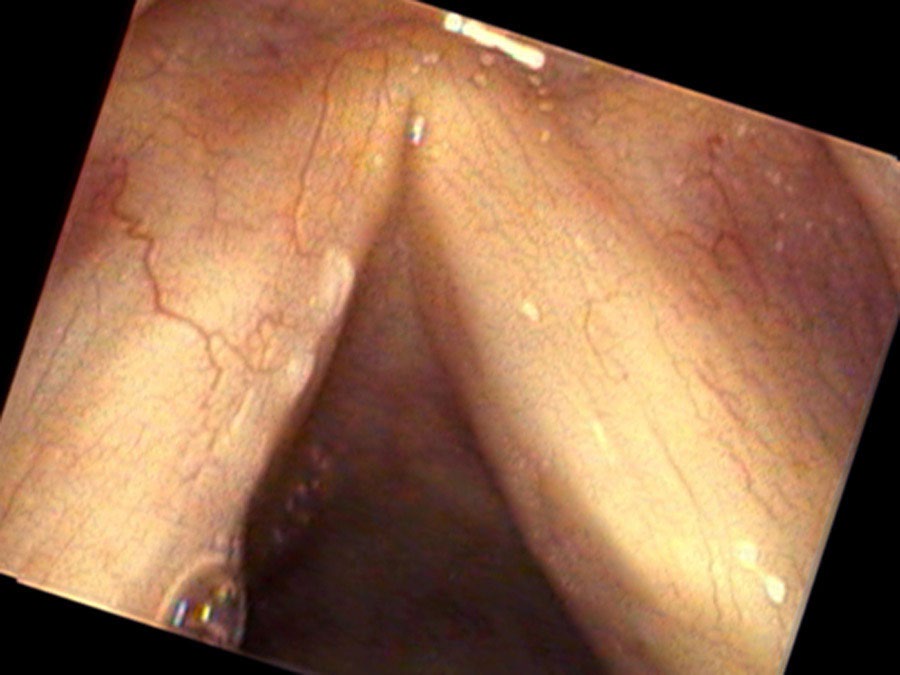
Treatment with the KTP laser effectively destroyed the blood supply to this area and burned off the white spots so there was no specimen for a pathologist to look at. I really cannot say this time whether the leukoplakia was benign or cancerous except that it grew rather slowly for three years. After treatment of both the leukoplakia and the feeding blood vessels, the white spots have not returned, although we continue with regular examinations of her vocal cords. We could treat the leukoplakia again if it comes back.
Careful close observation, with carefully directed precise treatment when necessary, may be a successful substitute for what, in the past, was essentially overtreatment.
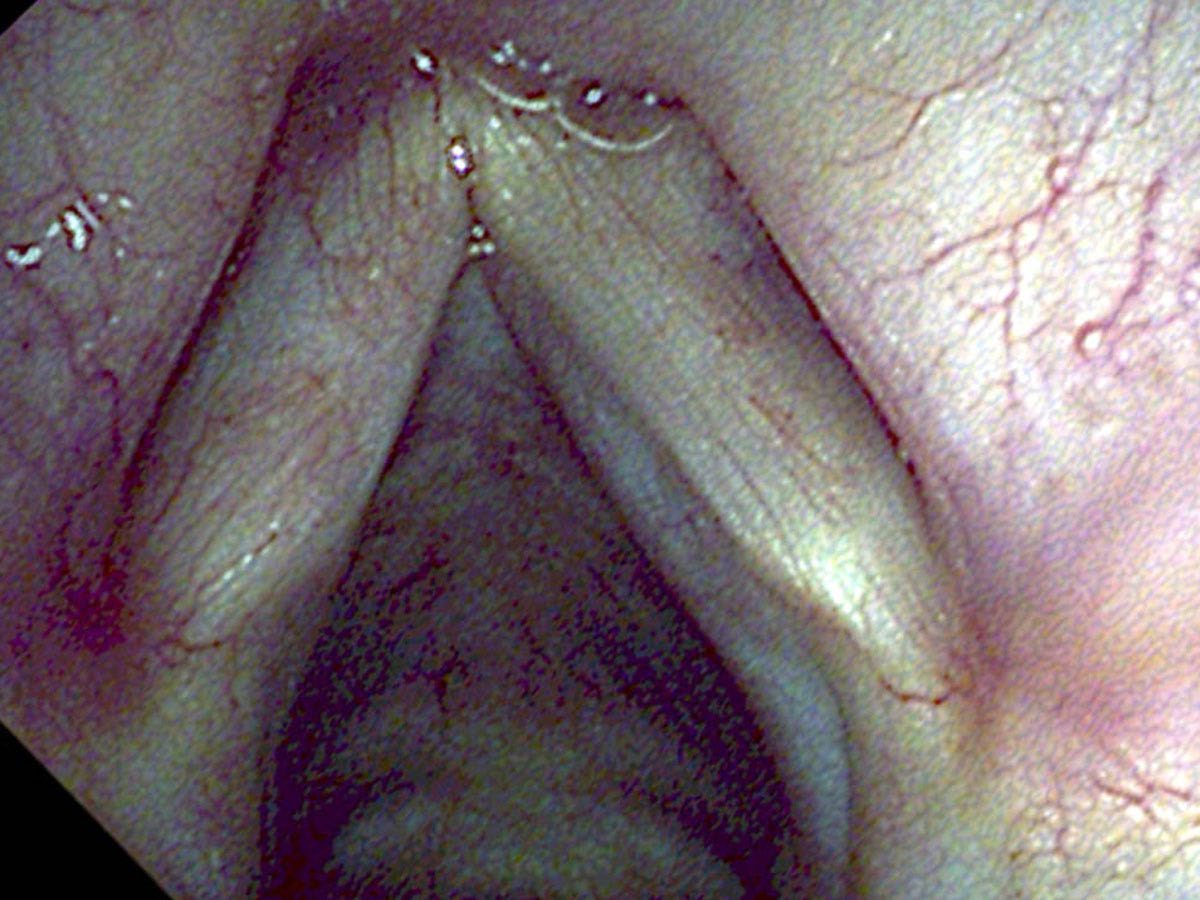
Leukoplakia may be benign or at times it may represent a cancer. After identifying abnormal white spots on the vocal cord, options for patients include treatment that removes the white patches or makes them go away, or careful observation and removing any white patches that grow over time. Cutting away part of the normal vocal cord along with leukoplakia, because it might be a cancer, might have the same cure rate, but sacrifices voice quality when a significant amount of normal tissue is removed.
What you learned
- Leukoplakia is a white patch on the vocal cord that may be benign mucosal thickening or early squamous cell carcinoma — a biopsy is needed to tell them apart.
- The KTP laser can treat leukoplakia and its feeding blood vessels in the office, without removing tissue for pathology — useful when a lesion appears stable over time.
- Regular endoscopic follow-up can substitute for aggressive surgical over-treatment, preserving normal vocal cord tissue and voice quality.
- Diplophonia (two pitches simultaneously) occurs when white patches cause the two segments of a vocal cord to vibrate at different frequencies.