
Darcy Loma noted her voice changing. Her primary care physician thought she might have a virus and treated her symptomatically. Her voice worsened and at an ENT physician’s office she was told she had a polyp. She became pregnant about the same time as the onset of the hoarseness and at seven months pregnant she was now winded climbing a flight of stairs. She is snoring at night, especially if laying on her right side. Two weeks ago she “coughed up a piece of the polyp” and has since had the taste of blood in her mouth at times.
Biopsy in a Pregnant Patient
An irregular lumpy mass on the right vocal cord which is papilloma. I biopsied this in the office, to avoid using a general anesthetic in a pregnant female and confirmed it was papilloma. We then decided to wait until the end of her pregnancy to treat it. By the end of her pregnancy she was a little more short of breath and her voice was completely a whisper.
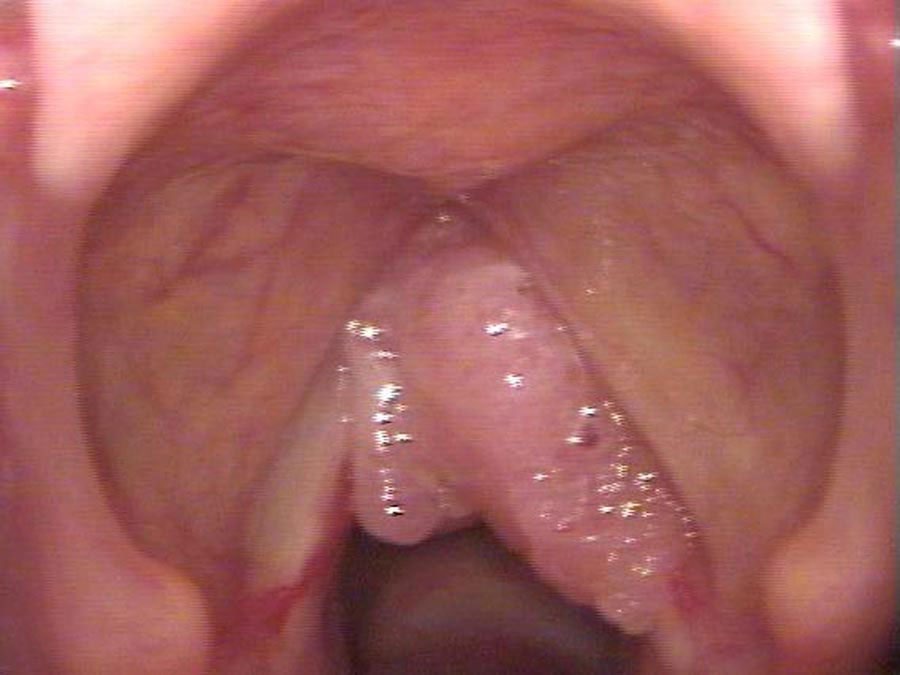
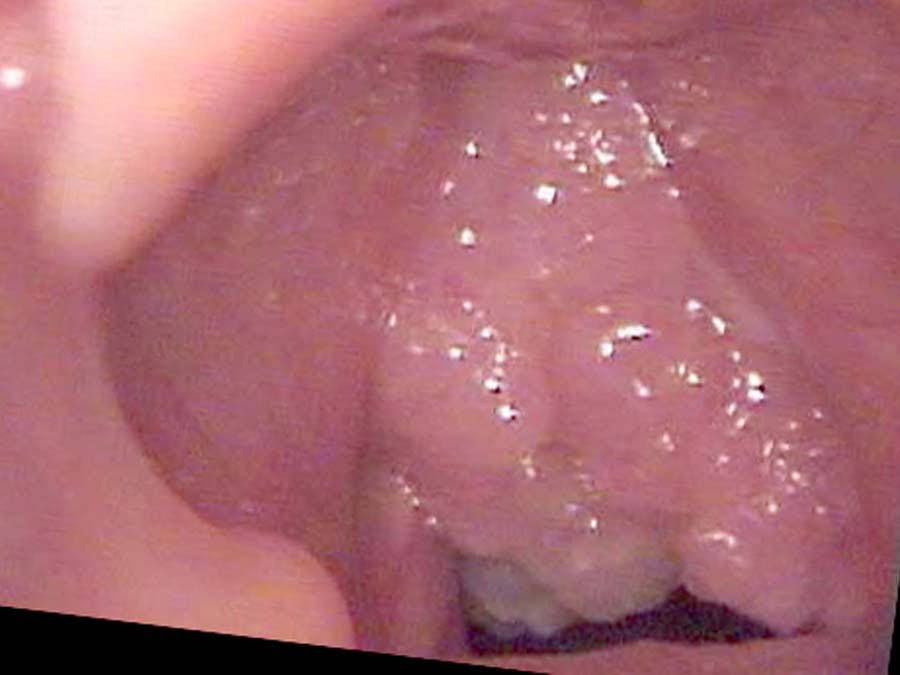
Why Papilloma Is Treated Like a Tumor
While this is an infection, the papilloma virus causes a growth, typically with little or no inflammation. Since it behaves much like a tumor, it ends up being treated in a fashion similar to tumors — excision. Papilloma most commonly grow on the hands, the feet, the nose and genitalia. While it may be transmitted sexually on genitalia, no one yet knows how it ends up on the vocal cords. Although we don’t have great options for treating viruses medically, various antiviral medications are being assessed. Also, the development of a vaccine (Gardasil™ — Human Papillomavirus Quadrivalent [Types 6, 11, 16, and 18]) against the most common type of papilloma virus found on the vocal cords shows promise for preventing the disease on the vocal cords. Recent evidence may even be suggesting that the vaccine given after acquiring the virus might diminish the growth of the papilloma virus.
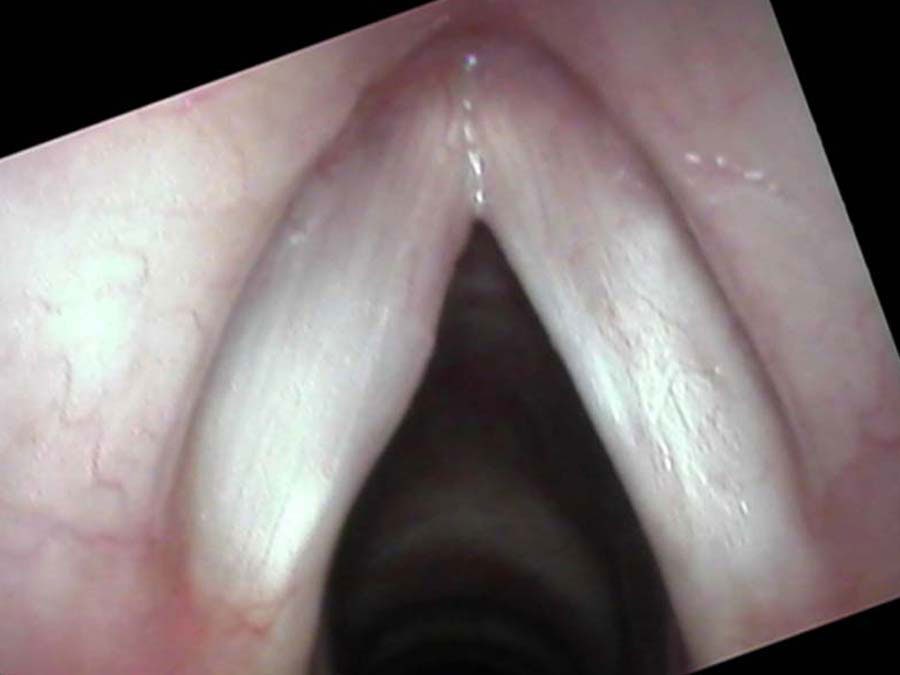
I excised visible papilloma from Darcy’s vocal cords three times. I use a CO₂ laser to cut around the edge of the papilloma and peel it off the surface of the vocal cords. It does not grow down into the vocal cords and with this technique I can best preserve the vibrations and functioning of the voice.
Recurrence and Long-Term Outcome
There is a generally acknowledged high rate of recurrence of papilloma after excision and consequently there are many methods attempted to treat it. Various antiviral drugs have been injected or administered. Other surgeons, although they use a laser, may burn off or vaporize the papilloma rather than cut around it, or they may use a device that sucks and shaves the papilloma off. I have some misgivings that these techniques can as completely remove papilloma while preserving as much of the underlying structure. She has now gone eight years without a recurrence.
With new high-definition endoscopes and video processors that selectively highlight the red in blood vessels, papilloma can now be fairly accurately identified endoscopically in the office. Small amounts of papilloma can also be treated in the office by ablation with a laser such as the pulsed KTP laser, which may be passed through a channel in the endoscope. The energy from the pulsed KTP laser is selectively absorbed by blood vessels and since all papilloma have a large central vessel they are particularly susceptible to destruction by this laser.
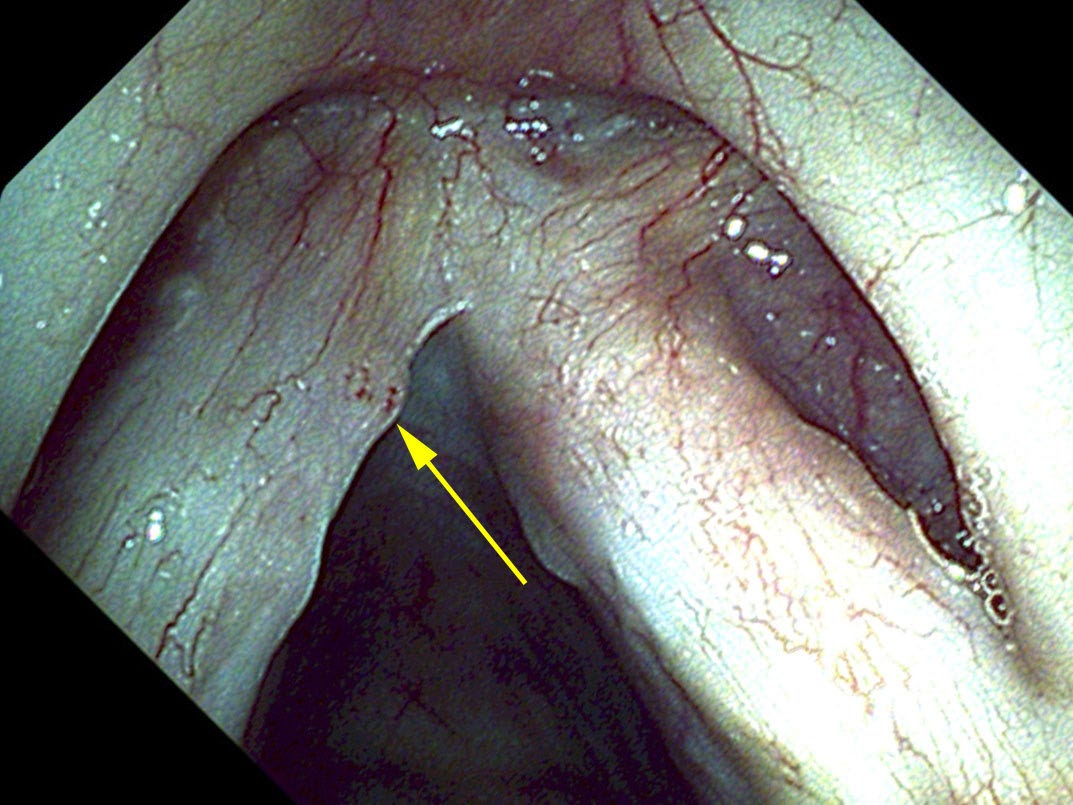
Papilloma virus behaves much like a tumor — it is treated by excision, not by medication. The goal of surgery is to remove it while preserving as much of the underlying vocal cord structure as possible.
What You Learned
- Human papilloma virus on the vocal cords causes a growing lumpy mass with little or no surrounding inflammation — it behaves more like a tumor than an infection.
- Progressive hoarseness, shortness of breath, and bleeding fragments that are “coughed up” are warning signs that the lesion is enlarging and obstructing the airway.
- Treatment is surgical excision, ideally with a CO₂ laser that cuts around the papilloma without destroying the underlying vocal cord structure.
- Recurrence is common and multiple procedures are often required; the goal is control, not necessarily cure.
- High-definition endoscopy with vascular enhancement and in-office KTP laser ablation have expanded the options for detection and treatment.
- The Gardasil™ vaccine targets the most common papilloma virus types found on the vocal cords and shows promise for prevention.