
I felt a tickle in my throat around 6 PM. By the time I went to bed, there was a noticeable discomfort in my throat. At first I had to clear my throat and later I began to cough. The following morning my throat was sore and my voice was deep. I had developed an acute laryngitis. I was heading into the office anyway, so I took the opportunity to have a look with my endoscope.
What the Scope Showed
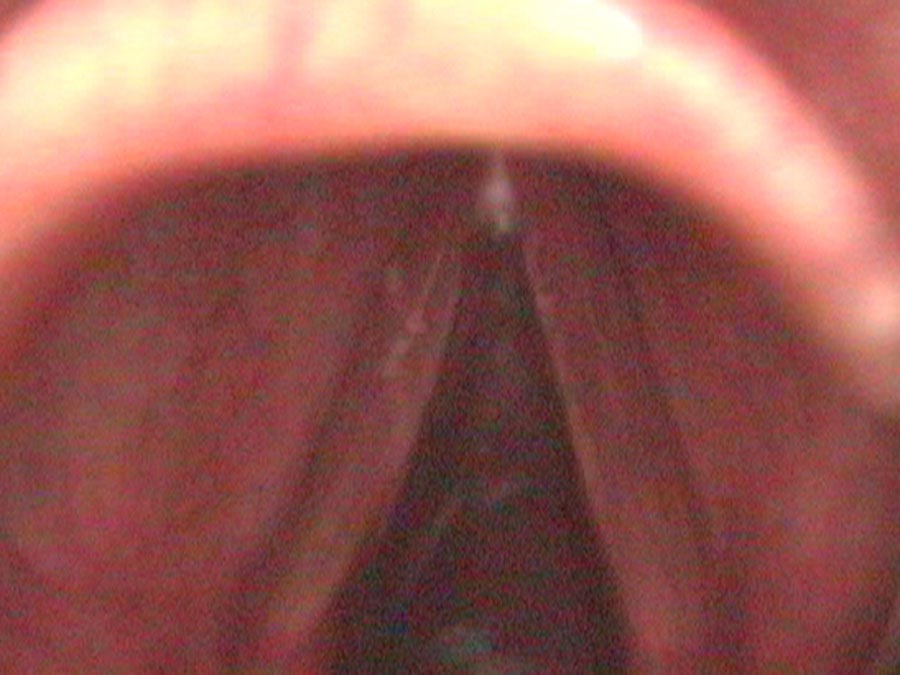
My vocal cords were noticeably thicker than normal. On endoscopy, they have a dull, swollen, glassy appearance. Secretions were unusually thick and sticky. I could sing lower notes than normal by more than half an octave. I also could not sing any upper notes at all. If the vocal cords swell enough, they may become stiff and unresponsive, but this time I did not lose my voice completely.
Mechanism and Recovery
Acute laryngitis is typically from a viral infection that causes the blood vessels within the vocal cords to dilate. Fluid leaks out from the blood vessels and accumulates beneath the surface of the vocal cords causing them to swell. In this case, the usual treatment of fluids and time gradually allowed my vocal cords to recover from this presumed viral infection. Within three weeks my voice was back to normal.
I realize that it is seldom that a patient finds himself in a laryngology office within 12 hours of the onset of acute laryngitis for a visual endoscopic examination of their vocal cords unless he owns one. Unless breathing is impaired, it is unlikely that there is much to do about acutely swollen vocal cords other than treat the symptoms. If an acute laryngitis fails to significantly begin to improve within about two weeks, it may then be worthwhile seeing a laryngologist.
If an acute laryngitis fails to significantly begin to improve within about two weeks, it may then be worthwhile seeing a laryngologist.
What You Learned
- Acute viral laryngitis causes the blood vessels in the vocal cords to dilate; fluid leaks into the tissue beneath the surface, causing swelling, stiffness, and a drop in pitch.
- Swollen vocal cords lose their upper range first. A very deep voice with absent falsetto is a reliable sign of significant cord edema.
- The glassy, dull appearance on endoscopy — combined with white sticky secretions — is characteristic of acute viral laryngitis and distinguishes it from most other causes of hoarseness.
- Treatment is supportive: fluids and time. Antibiotics do not help a viral infection.
- Failure to improve within two weeks is the threshold for laryngoscopic examination — other diagnoses must then be considered.