
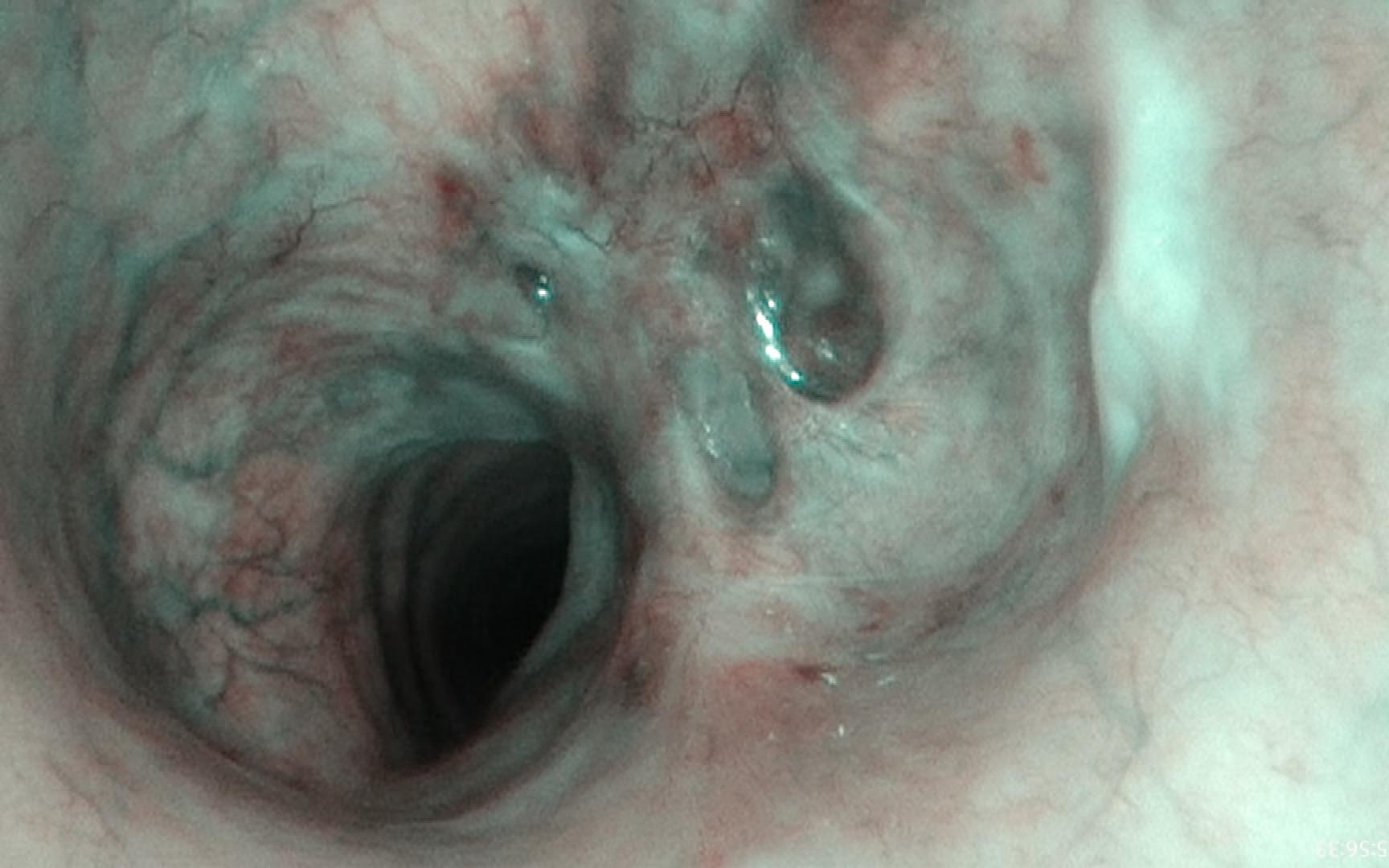
When symptoms of cough and hoarseness might be hidden — a subglottic stenosis missed for ten years
I have posted a new piece, When symptoms of cough and hoarseness might be hidden. It follows a patient — a composite, but a familiar one — who spent ten years being treated for reflux, asthma and vocal cord dysfunction before anyone looked below her vocal cords.
Subglottic stenosis hides well, and the reason is physics. Resistance to airflow rises with the fourth power of the radius, so for years an airway can narrow steadily while breathing at rest stays easy and every test reads normal. The patient notices only at exertion. Then the curve turns, and the same small further narrowing that changed nothing for a decade changes everything. Most people are not diagnosed until that point — but the long, quiet years before it are exactly where the diagnosis is there to be made.
The piece walks through what her larynx looked like, why the vocal cords act as a curtain in front of the answer, and how the endoscope becomes a measuring tool once you pass it through the cords and examine the airway to the carina. It includes her actual flow-volume loop, digitized from her own report, and a clinician note on the two spirometric indices built for the upper airway — neither of which her report ever calculated.
It also covers what I do about it: stellate incisions rather than excision, balloon dilation and steroid at the same sitting, and Dr. Ramon Franco’s serial office injections, which have kept many of my patients out of the operating room entirely. Plus one instrument to avoid, and an honest counterweight to what I was taught about the cause.
Read it here: When symptoms of cough and hoarseness might be hidden →