
The PCA muscle is the only muscle that opens (ABducts) the vocal cords for breathing. Located on the back of the larynx, it is strongly activated by sniffing and can sometimes be seen directly bulging behind the arytenoids.
The Posterior CricoArytenoid (PCA) Muscle
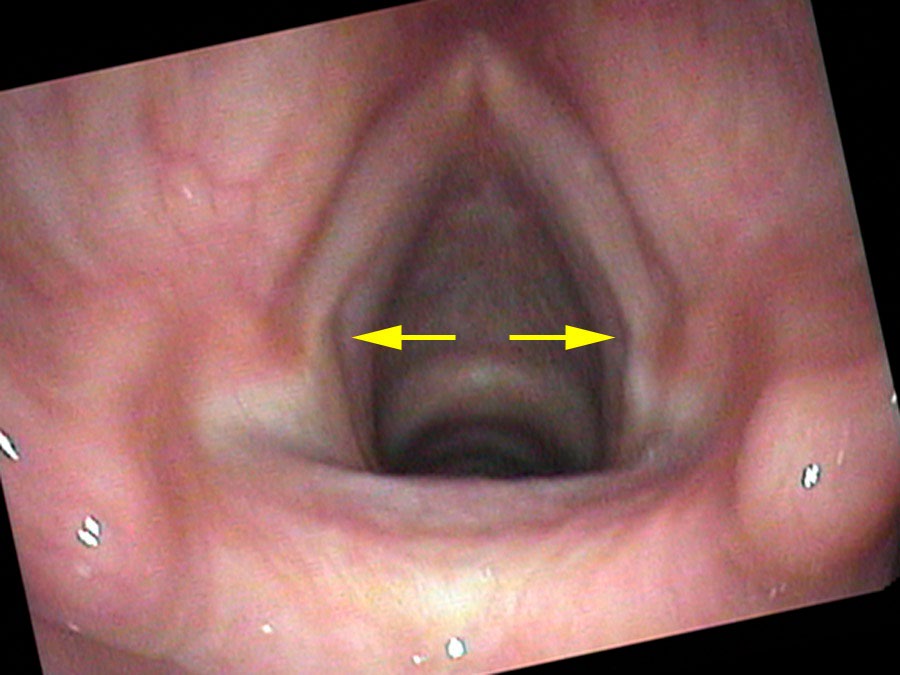
The PCA muscle is located on the back of the larynx, behind and lateral to the arytenoid cartilage. It pulls on the arytenoid cartilage to open the vocal cords for breathing. The effect of contraction of this muscle can be visualized as the opposing effect of contraction of the LCA muscle.
The PCA muscle is strongly activated by sniffing. During a brisk inhale through the nose, the PCA muscle contracts and each vocal process moves laterally, increasing the size of the opening of the glottis.
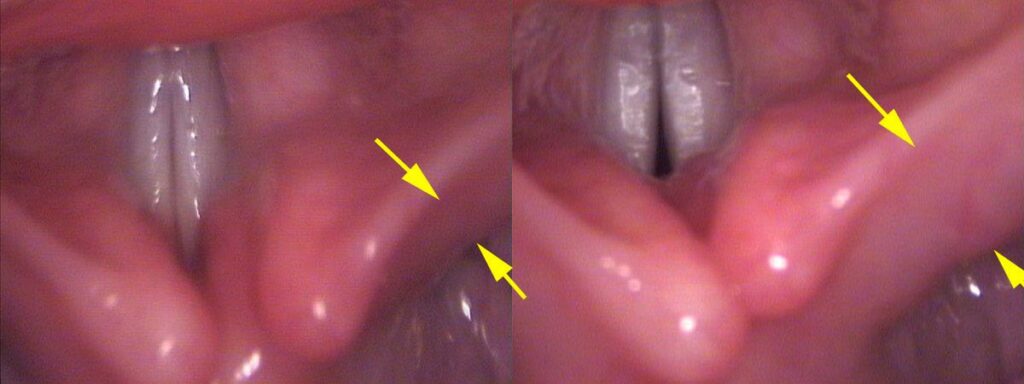
The PCA is the only abductor of the vocal cords — and its actual bulk can sometimes be seen bulging behind the arytenoids during excess tension phonation.
Additionally, contraction of the PCA muscle can be viewed when a person initiates sound with excess tension. The LCA muscle brings the vocal cords together but then the PCA muscle also contracts and pulls the vocal processes slightly apart. The actual belly of the muscle can be seen bulging behind or posterior to the arytenoids.
What You Learned
- The PCA is the sole abductor — it is the only muscle that opens the vocal cords for breathing.
- Sniffing activates it strongly — a brisk nasal inhale drives the PCA to open the glottis to its maximum.
- Its bulk can be directly seen — when the PCA contracts during excess-tension phonation, the muscle belly visibly bulges behind the arytenoids.
- It opposes the LCA — understanding PCA action is best appreciated as the mirror image of LCA contraction.