
Christina Amarillo is 30 and has been getting progressively more hoarse for the past 10 years. Her mother and three aunts are all hoarse. One of her aunts had surgery and amyloid was removed from her vocal cords. Listening to Christina’s husky voice, she leaks air. On endoscopy there are patches of yellow material underneath the mucosa of the vocal cords. These vocal cords are stiff and do not come completely together because of the yellow deposits.
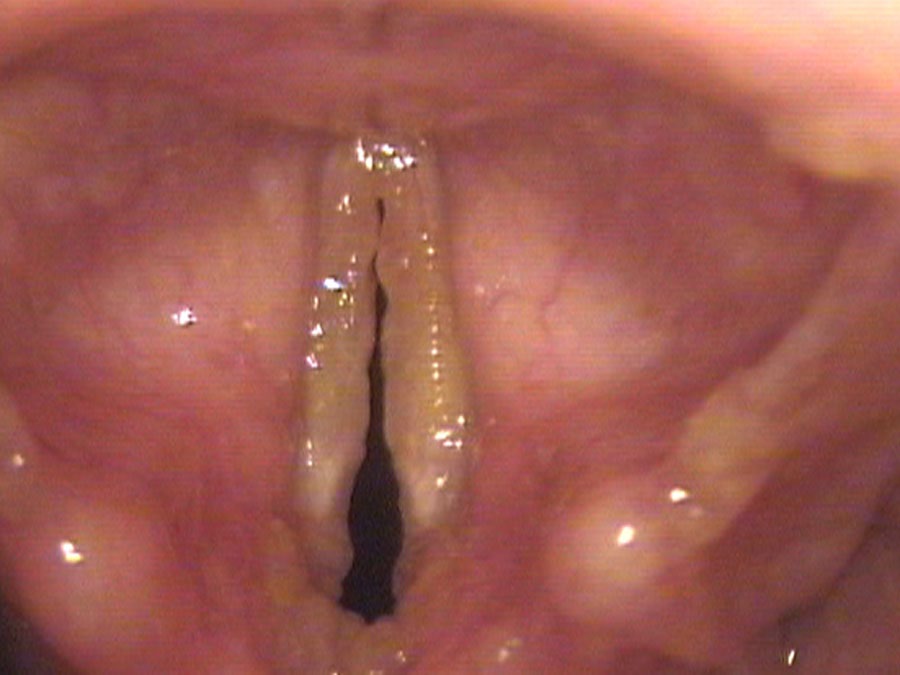
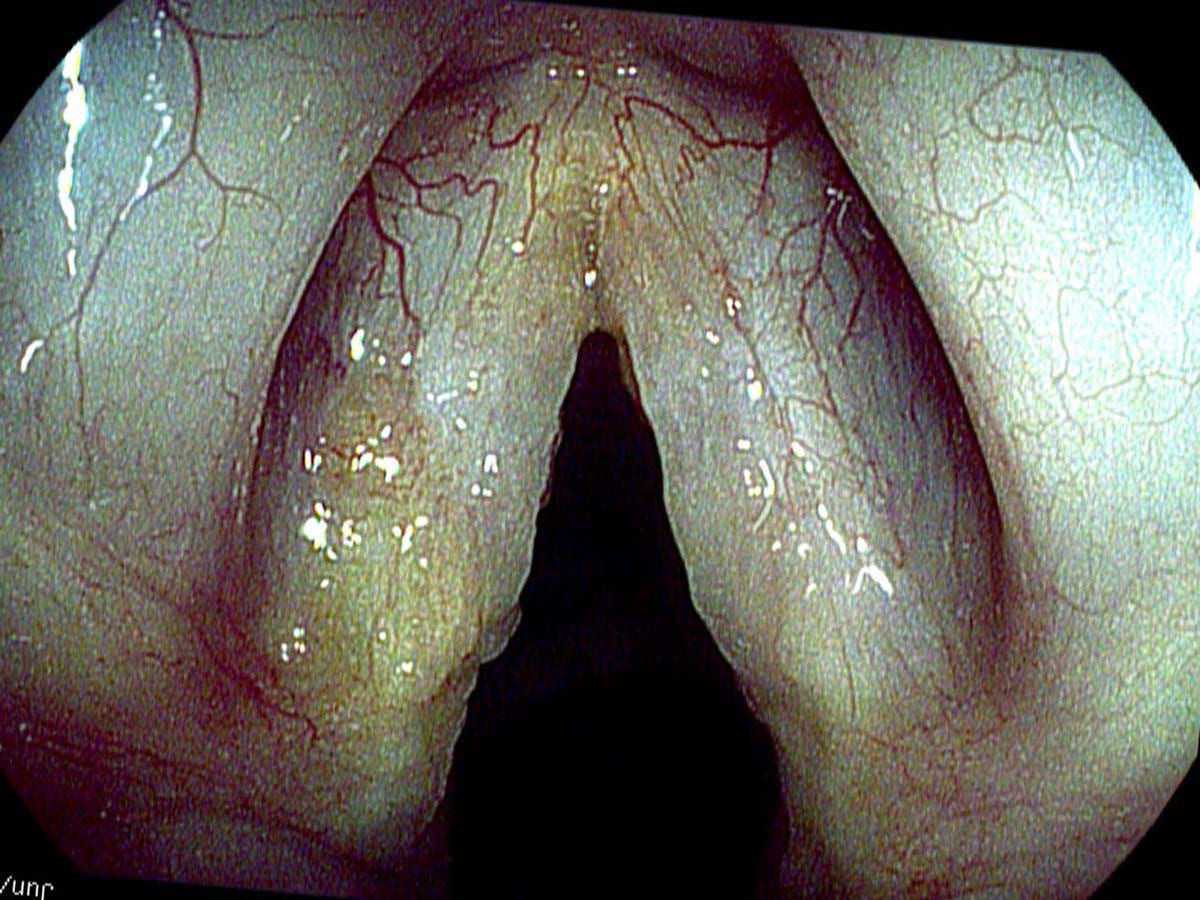
In this condition, blood vessels seem to break easily and rather than the body reabsorbing all the blood, a yellow material is left as a deposit where the bleeding occurred. Deposits on the edge of the vocal cord create an irregular edge such that air leaks between the cords (huskiness) and the deposits create differences in stiffness and mass between the cords so that they vibrate at different pitches at times (roughness). Eventually more effort is required to start them vibrating.
Blood vessels seem to break easily and rather than the body reabsorbing all the blood, a yellow material is left as a deposit where the bleeding occurred — gradually building up along the vibrating edge of the cord.
Another type of amyloidosis consists of deposits into the false vocal cords. If the false cords enlarge enough with the deposits, they eventually can put pressure on the true vocal cords and dampen the vibrations. The current treatment is to remove the deposits with surgery — very gentle surgery if the deposits are on the true vocal cord. The deposits will likely gradually reoccur over time. They can be removed again.
What you learned
- Laryngeal amyloidosis is a hereditary condition in which fragile blood vessels deposit a yellow protein material along the vocal cord edges as they repeatedly break and fail to fully reabsorb.
- The deposits cause both husky hoarseness (air leak from irregular edges preventing complete closure) and rough hoarseness (diplophonia from asymmetric stiffness and mass).
- Amyloid can also deposit in the false vocal cords; if large enough, the false cord swelling presses down on the true cords and dampens vibration.
- Surgical removal is the treatment — gently, to avoid scarring the true cord — but deposits typically recur over time and require repeated procedures.