
All types of gaps between the vocal cords create husky hoarseness by leaking air. There are five characteristic gap patterns — each with a distinct location, cause, and visual signature on endoscopy.
A laryngologist would do well to keep “Mind the gap” as a constant reminder. The gap between the vocal cords deserves primary attention during endoscopy and is easily overlooked while examining surrounding structures. Under idealized conditions, the vocal cords lie parallel during voice production and close completely with each vibratory cycle. All of these types of gaps leak air and create husky hoarseness.
Posterior Gap
If the vocal cords are moving from the breathing V-shape toward a parallel position but stop short of complete closure, a posterior gap remains. One example is muscle tension, where the opening muscles (PCA) partially tighten during phonation, competing with the closing muscles (LCA) and holding the cords slightly apart, allowing air to escape between the posterior portion of the vocal cords.
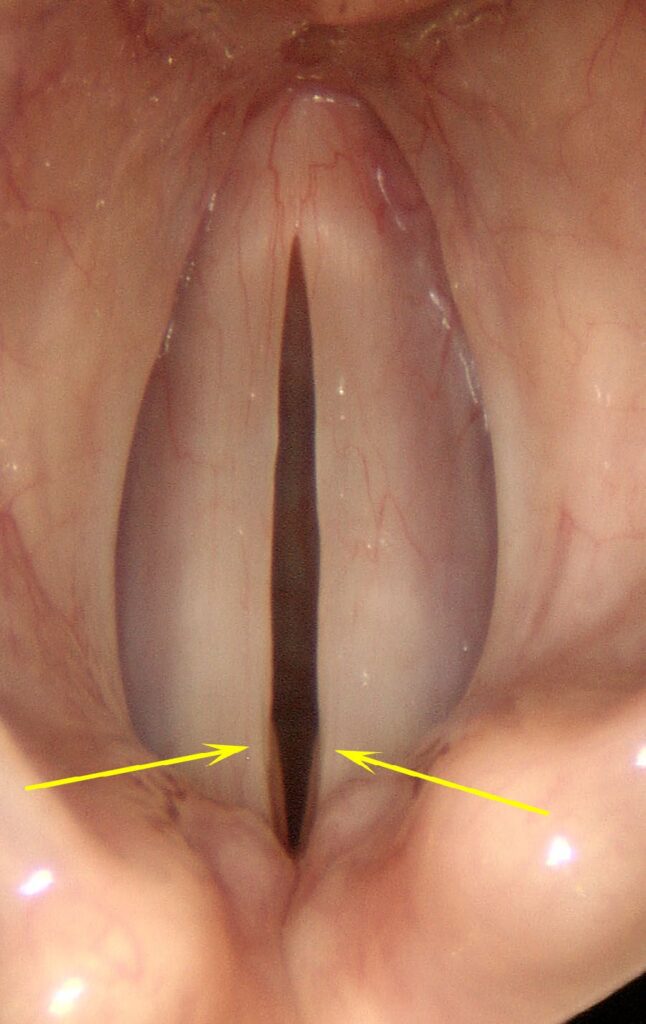
Anterior Gap
Vocal cord trauma may disrupt the vocal cords where they attach at the front of the larynx. If the vocal cords heal slightly apart at the anterior commissure, air escapes through the front of the vocal cords. It really becomes impossible for a person to close this gap without the help of surgery.
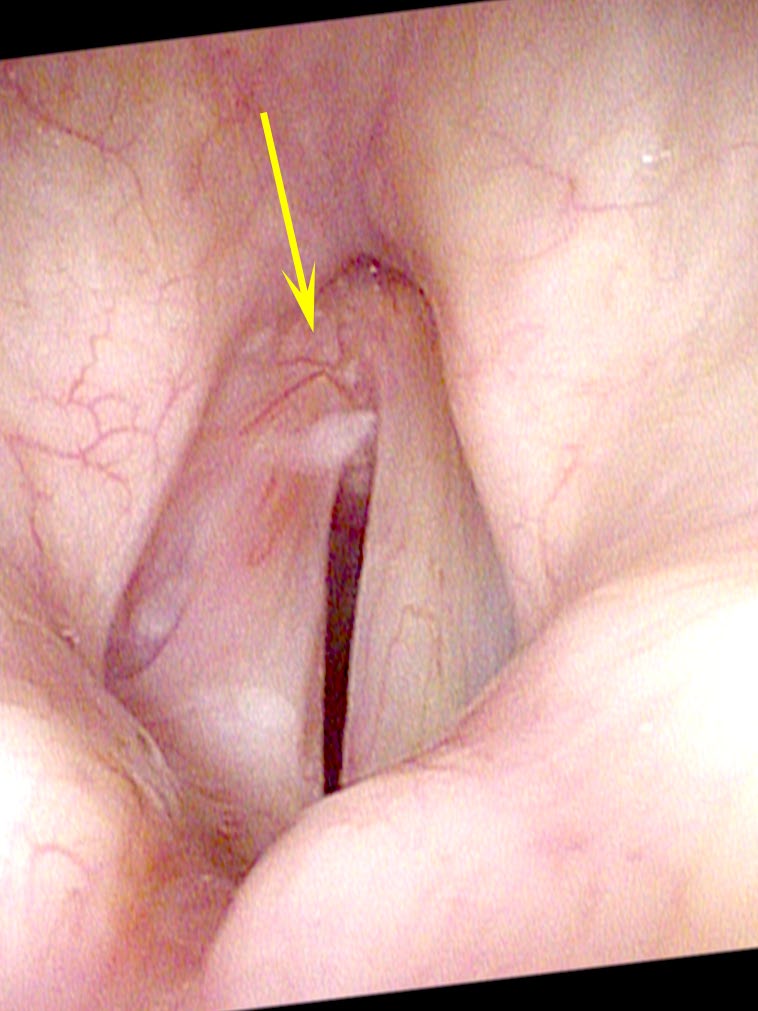
Central Gap
If the vocal cord muscles are not exercised regularly, they atrophy and can no longer tense to a straight line. They remain concave even when the vocal processes are completely closed, creating a central gap. Aging contributes as well — the vocal cords sag with aging as they lose elasticity, producing a nearly oval-shaped gap with pointed ends. An asymmetric central gap is created when tension within one vocal cord is reduced, allowing it to oscillate further laterally than the other side, suggesting a thyroarytenoid muscle paresis.
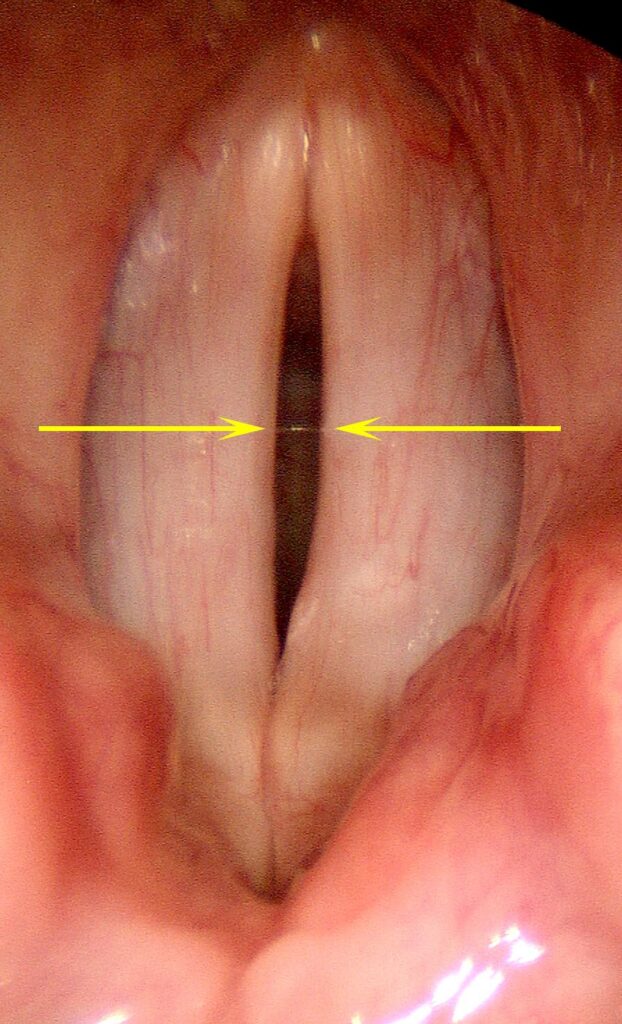
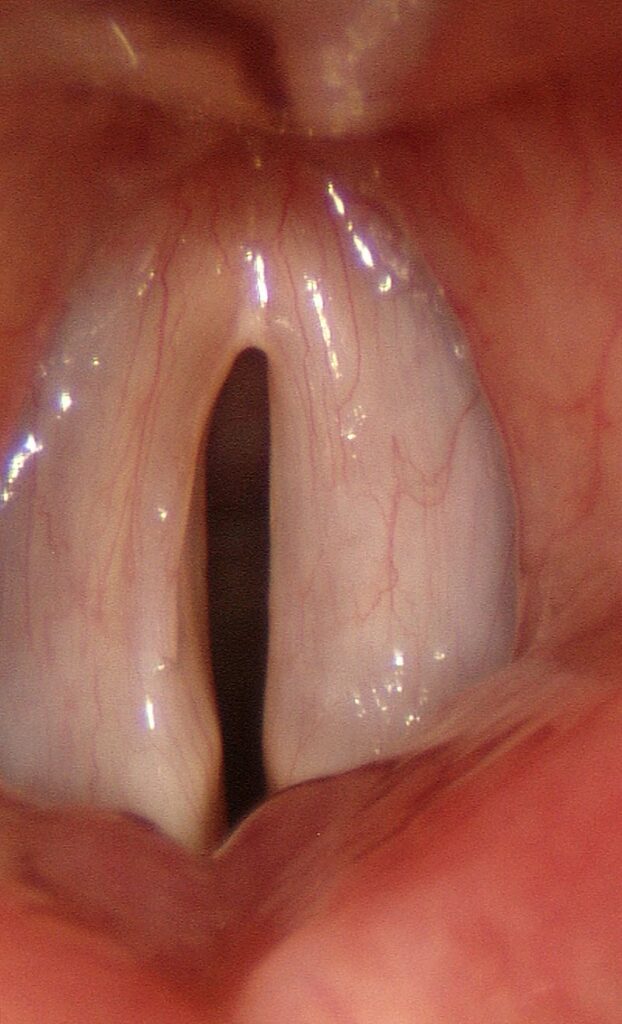
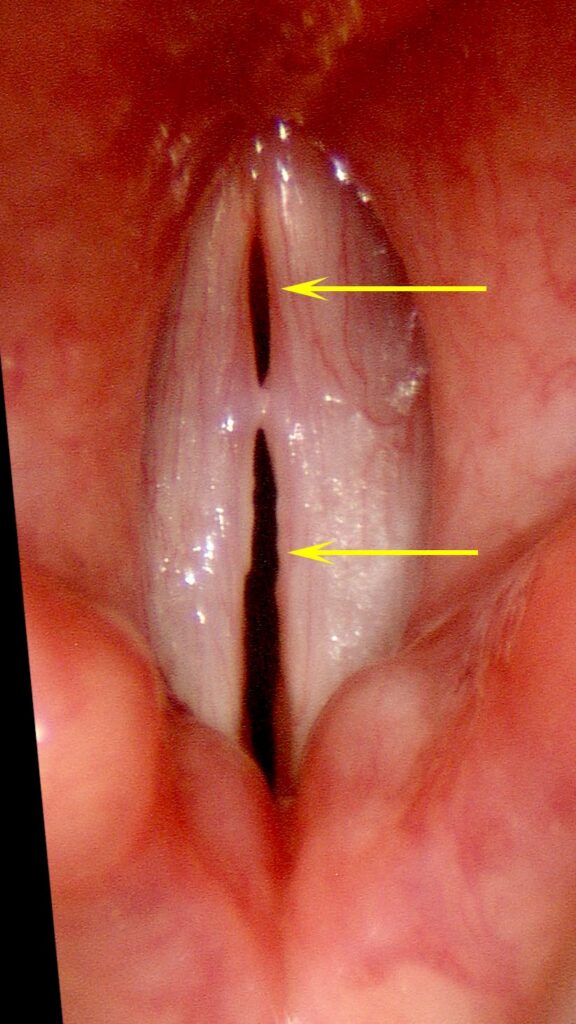
Split Gap
Vocal overdoers typically develop a callus or swelling in the very center of the membranous vocal cord. This protuberant swelling will touch first as the vocal cords are tensed, leaving an opening both anterior and posterior to it — a split gap. It is best visualized at higher pitches. As the vocal cords tighten, any marginal swelling is pushed further medially and made more visible to the examiner.
Timing Gap
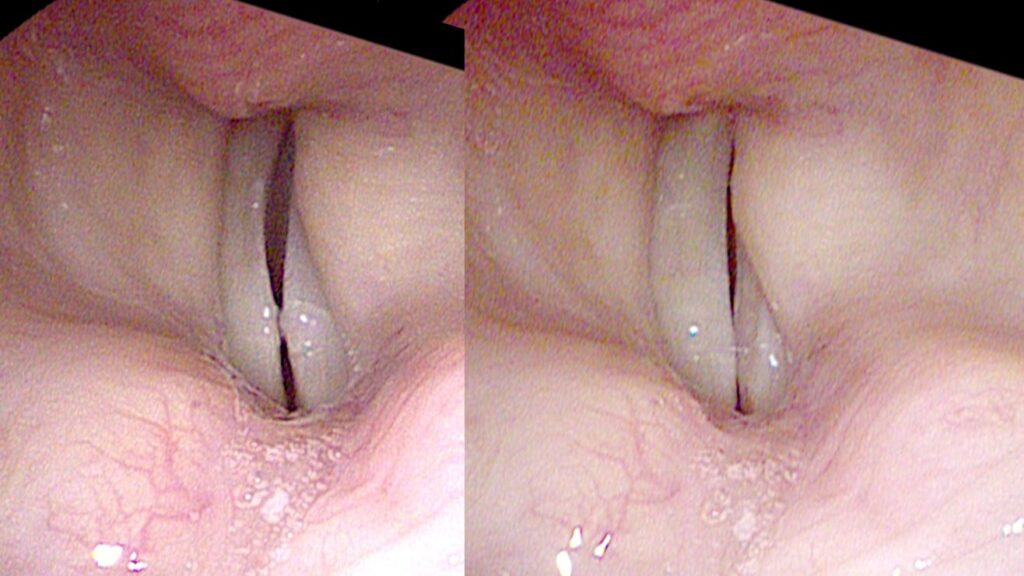
Anything that makes the vocal cords uneven — in mass, length, or tension — can put them out of sync. With a mild asymmetry, they may oscillate out of phase. Under a strobe light it looks like they are chasing each other. They may never touch, so air continuously leaks out even while crossing each other’s path. This is a gap created by timing. If they become slightly more asymmetric, they may begin to oscillate at different frequencies — diplophonia — and both huskiness and roughness are heard simultaneously.
What You Learned
- Five gap patterns, one mechanism — posterior, anterior, central, split, and timing gaps all produce husky hoarseness by leaking air.
- The gap’s location reveals its cause — posterior gaps suggest muscle tension; central gaps suggest atrophy; anterior gaps suggest trauma; split gaps suggest overdoer swellings.
- A timing gap bridges huskiness and roughness — asynchronous cords that never touch create continuous air leak; if they become more asymmetric, two simultaneous pitches emerge.
- Higher pitch makes gaps more visible — tensioning the cords with CT elongates them and exaggerates any central or split gap, improving diagnostic yield.